

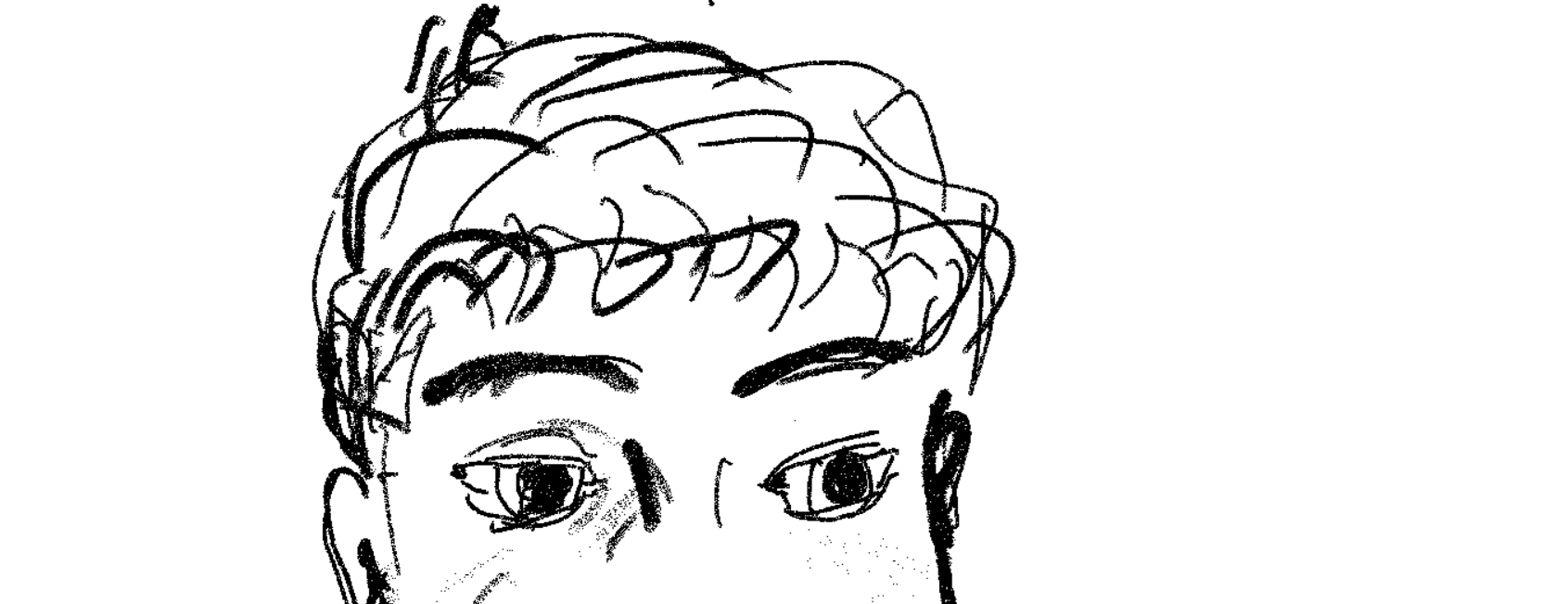
When you reveal to someone that your child is autistic or has autism, the first question that often forms in the mouth of the other ignorant person is something like, “Is he high functioning?” I don’t offer up “ignorant” as a disparaging remark. I mean it more as its definition intends, as in uninformed, unfamiliar, uninitiated, uneducated on whatever the topic may be.
I can confirm that this seems to be true for me when I’ve brought it up to people. “Is he high functioning?” they ask, crossing their fingers with the cautious optimism of being able to quell a potentially challenging conversation.
My ex-wife brought this up recently — that guys ask her, “Is he high functioning?” when she reveals that she has a child with autism. She told me that another one of her friends, a single special education instructor, also experiences this question often. She (my ex) was wondering whether that was a function of them (the guys) being jerks or something else. I told her that I’m of the opinion that it’s one part a function of societal ignorance and one part very ignorant human reaction (at best) of “Oh, awkward, I’m not sure what I’m supposed to say here but it should be something kind or encouraging,” or (at worst, in the dating scenario), “Oh shit, hopefully, they’re just a little socially awkward kid…freakin everyone is ‘neurosomethingorother’ these days. What does this mean for me? Am I going to be saddled with a real challenge and extra baggage if I shack up with this person?”…and if the latter is the case (at least with my very strong and intelligent ex), know that you are not going to be shacking up with said person anyway fuckboy, move along.
But I think we should zoom out and also look at progress. Twenty-five years ago, when I was in high school, neurodivergences like autism, Asperger’s, and ADHD weren’t in the cultural lexicon. More frequently, due to our collective unfamiliarity, we would relegate neurodivergence to the “R” word, particularly as it relates to children farther along the spectrum with learning disabilities, social/emotional disabilities, and disabilities with sensory regulation, among many other challenges. Even now, I stumble while writing some of the verbiage because I do not wish to disparage someone inadvertently. But as a whole, we’ve come a long way in a short amount of time. It just so happens that we have an even longer way to go.
People are maybe trying more … maybe. But there are still the occasional slips. I once worked with a person who was exasperated and stated openly that running a business was like having a special needs child — first off, no, it isn’t.
Second, I’m not deeply wounded, either. I simply shook my head and sighed before moving along. This is, categorically, not the worst thing that someone has ever said. It was just a selfish throwaway of a statement. It’s not worth warring over. He simply wasn’t regarding how it really sounded and its implications. He doesn’t have that hardship. It was the kid not eating his vegetables, even with starving children on the other side of town. It was flippant. I knew what he meant, but it was still so ignorant that it leaned into the more “jerk-like” side of possible verbal slips one can have. I’m not an apologist. People need to get their shit together with these things, however, if I tried to fight every battle, I’d lose focus on any shot at moving toward the end goal. The needle would never move.
My first child has autism, ADHD, and a plethora of sensory issues. At one point, we–his parents–offered ourselves the label of “high functioning” because it was impossible to determine the end state. We knew early on that something was different about my son, now ten, when he was as young as two years old. There were small things and social hiccups in daycare that led to needing extra attention and in room support, finally leading to an official diagnosis, occupational therapy, speech therapy, and a brief stint with ABA, finding a home that was zoned for the public school that would best suit his accommodations (and allow for his sister to go to the same school). Summer camps are always challenging. Is it inclusive? Can we let him go? Will he be safe? Will he take away from the experience for the other kids, and is that fair?
There isn’t any guide for this journey. There isn’t any preparation you can do unless you’re already initiated to it.
We all hope that our children will have an easier life than our own, so when a challenge arises, and you’re up for it because nothing is more important than your children, you charge forward, do the research, do the work, with the idea that your child will not fall behind. Your child will have a happy life. Your child will be successful. Your child, after all, should and will outlive you, and therefore, you have to prepare them for the time when you are no longer able to protect them.
I’ll pause to count my blessings. My son is healthy and happy. My son can speak, and although he cannot hide his neurodivergence due to the way he processes information, leading to various vocal patterns and physical ticks, he can communicate well. That was a hurdle that we weren’t initially sure of. I’m so proud of how far he has come. He also reads now and at an ability level we were never sure he would get to. And while he’ll never win any handwriting contests he can, with extra time, write out what he is thinking with decent spelling. All of these are victories. He can count and do basic one-digit math using aids. He can use a calculator for the rest. All of these things that you take for granted that your child will be able to do slowly get scrutinized and seen as small miracles in a way that other parents can’t really understand.
After a few years of special education schooling, he was able to enter a general education classroom with assistance, where he was periodically pulled out for extra occupational and speech therapy. His Individualized Education Plan (IEP) and Behavioral Intervention Plan (BIP) are codified and updated regularly to keep up with his needs. He has a team of people around him who support him and are capable of helping.
His mother, stepmother and I are also absolutely annoying to all involved. But you have to be. You are and will be your child’s greatest advocate. The system as it is, with all the good intentions and people that are inside of it, does not have the resources or time to be as much of an advocate as you, the parent, can. I always feel absolutely terrible for the parents who, through lack of resources, or feelings of helplessness themselves, or inability to educate themselves, just leave the system to do what it will…because it is not enough. I hope one day it will be and that every child’s accommodations are fully met, but right now it is sorely lacking.
My son is in fourth grade now and doing pretty well. Fourth grade marks an interesting place in academics. It starts taking the foundational work you’ve done in math and reading and writing and putting it to use in a more critical and intensive way. Both the amount of work and the complexity of the work accelerates. There is more work in class and volume of homework as a result.
For us at home this often means a parent sitting with him for several hours while overseeing both the completion of his homework and the work he wasn’t able to finish in class. Because he gets pulled out of normal instruction for additional speech and occupational therapy, among other things, he often has work that needs to be completed. We open up his folder and sit at the table and work. We break for dinner and then we come back to the table until it’s done.
Because of the uptick in complexity and volume of work, generally the older he gets, the larger the divergence from his peer group is apparent. When they were all little, his speech wasn’t as big of a deal. A little bit older than that, okay so he’s behind in writing, no big deal, we’ll do extra work. He’s also “normal” looking and quite handsome. But reality is setting in, that all of the little consolation prizes we hand ourselves are not always bearing fruit. He is very different from his peers. And while he is high functioning compared to many, I still would not label him as high functioning across the whole.
People offer up high functioning as a consolation prize as a way to be kind, out of their ignorance, as a way to say, “Well he’ll still be alright, won’t he? He’ll just be a little weird.”
On the positive pop culture side it conjures up visions of “Big Bang Theory” where the socially awkward neurodivergent person fumbles their way through life in an endearing way. No one addresses how mean other people are. There’s just a laugh track and heart. If only it were so simple.
Many also hold onto the hope that by being autistic, perhaps there is some hidden superpower. Maybe there is some talent that, because of this individual’s otherly wired brain, perhaps they can memorize entire pages at once. Perhaps they can recall facts at amazing speeds and precision. Perhaps they can do large math equations down to the tenth decimal place in seconds. Whatever it is, we romanticize it. Perhaps your child will be the next Benedict Cumberbatch version of Sherlock Holmes?
My son is incredibly imaginative and enjoys reading stories, watching movies, playing video games, playing with legos and with his toys. He’s funny, handsome, and compassionate. He has most of the same impulses as other kids and annoys his sister (and is annoyed by her) in much the same way as any neurotypical kid. And while I’m optimistic, I’m not blindly so, and at least up until this moment, he has not displayed a “superpower” that could be exploited in a pragmatic way. I mean to say that he has no extra skill that could be translated to real world gain thus far compared to his peer group. In fact, everything about his condition has provided obstacle rather than opportunity.
I am not a pessimist either. I hope and hold a world of dreams for my kids. It is difficult to see his cone of possibilities narrow as he gets older, though. He knows this too. He sees it. And it hurts so badly to see your child deny his own unhideable diagnosis because he wants to be included so badly in things he simply couldn’t be, is incapable of being. I’m not being mean either. Some things he just can’t do. And that hurts. He’s reckoning with it, maybe in a similar way as me. I get it. No one wants to be told what they can’t do.
I’ve wished for so long to be a fly on the wall of his mind, to try and see how he sees things. It’s impossible to determine whether he’s really understood or processed some of the things you say to him. Repetition and time are the only things that can reveal demonstrations of understanding. It’s just hard not to know.
And because I don’t know if he knows, I go through cycles of guilt and frustration as I go too hard to try and make him act a certain way. I feel guilty when I’m mean or annoyed by him…and don’t mistake me…he can be annoying in a way that will make you want to explode. I see him being his own worst enemy and go duck hunting with a bazooka, trying to get him in line for a world that will not understand him. I’ve told him that I love him and that I don’t need him to like me for that to be true. I don’t know if any of it really sinks in. And it leads to wounds ten years deep at this point that beg the question, why him? Did I do something wrong? Did we feed him something? Was it that time he rolled off the couch? Did he bump his head? Did he not get enough [insert thing from some article you read]? Of course, the answer is that it’s just his genetics…and both his mother and I are “on the spectrum,” no denying it (for me anyway, I won’t speak for her). But I still play it back every time I go through a challenging period with him.
His struggle is my struggle, and like parents of neurotypical and able-bodied children, I am reckoning with a more extreme version of what success looks like for my kid. I have to frame it around his health and happiness. That’s a way different view from what you might think of your kid in one of the many incarnations that dream might take — college, a career, a family, kids, etc.
I’m preparing for the distinct possibility that he may always live with me. We’ll see what he’ll be capable of for work. I don’t know that he’ll be able to stay in a gen ed setting as we progress into middle and high school. I just don’t see how the system can accommodate that. I’m hopeful, but again I see the divergence from his group. I’m seeing him start to hit the wall with certain academic concepts, so the cone of possibility gets narrower still.
And beyond his mother, stepmother, and I, there is the knowledge that his two younger siblings are ‘tapped in’ when everyone else kicks the bucket. An unnecessary burden that was simply in their cards. One that I’m sure they will handle with aplomb, but one that I feel guilty for having to burden them with. An existential dilemma. True angst. Angst is a problem for which there is no solution, not really.
Lastly, should he ever read this, I need him to know that anything I said here that seems like a negative of him, is really an ignorance or negative of me as I navigate the best way to make his life better. His father, me, is a person with needs and [a lot of] issues, just trying to figure it all out. It IS selfish that I’m airing this shit out there. But I’m also a writer, and this is one of the best ways I know to process things. I also think it’s valuable for all the parents of neurodivergent children out there to know that they aren’t alone. It’s okay to acknowledge that I wish life was easier for him. That I hold in my heart two truths — one that I wish it wasn’t so hard for him and that he didn’t have to face the adversity and that if there was anything I could do, I would. The other is that I love him more than anything.